Energy Substrate Switching in Time-Restricted Patterns
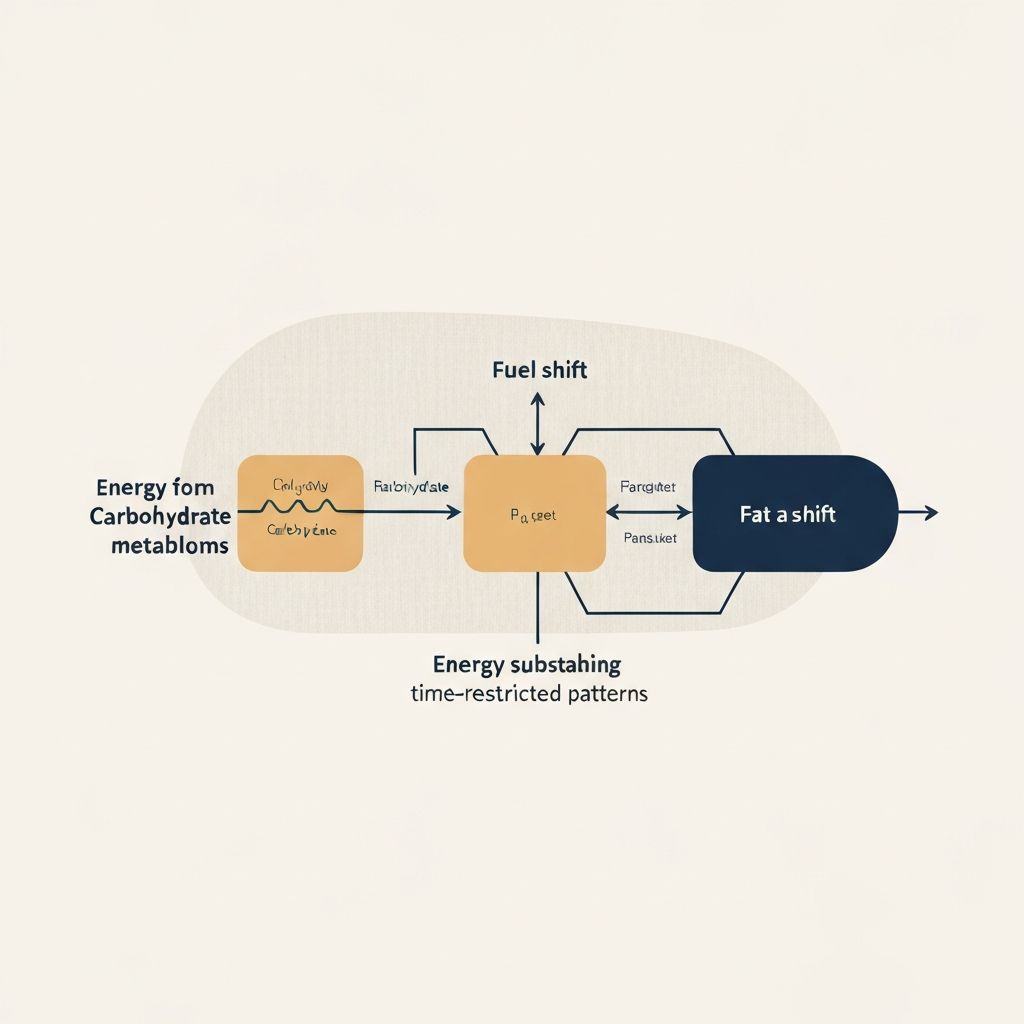
Metabolic Flexibility: Adaptive Fuel Switching
Metabolic flexibility represents the capacity of biological systems to adaptively switch between competing fuel substrates according to nutrient availability and energetic demands. Healthy human physiology demonstrates remarkable metabolic plasticity, transitioning seamlessly between carbohydrate oxidation, lipid oxidation, and ketone utilisation as nutritional contexts change.
This substrate switching capacity evolved as an adaptive response to ancestral nutritional variability. Throughout human evolutionary history, periods of feast alternated with periods of scarcity. Organisms capable of efficient metabolic substrate transitions—mobilising stored lipids during nutrient shortage whilst efficiently utilising abundant carbohydrates when available—survived differential mortality pressures favouring this flexibility.
Contemporary time-restricted eating patterns recreate temporal oscillations between nutrient availability (feeding windows) and nutrient scarcity (fasting periods), repeatedly engaging the metabolic flexibility machinery underlying substrate switching. Understanding these transitions illuminates the physiological processes activated during temporal eating patterns.
Phase 0-2 Hours: Immediate Postprandial Carbohydrate Oxidation
Immediately following nutrient ingestion, absorbed carbohydrates elevate blood glucose robustly. Pancreatic beta-cell insulin secretion increases markedly in response, promoting glucose uptake into muscle, adipose tissue, and liver.
Glucose Transporters and Metabolic Signalling: Elevated insulin stimulates GLUT4 glucose transporter translocation from intracellular vesicles to muscle and adipose tissue cell membranes, dramatically increasing glucose uptake capacity. Hexokinase phosphorylation of glucose produces glucose-6-phosphate, committing the glucose to metabolism.
Glycolytic Pathway Activation: Glucose-6-phosphate enters glycolytic pathways, generating pyruvate and ATP through substrate-level phosphorylation. This rapid energy production supports elevated insulin-stimulated anabolic processes including protein synthesis and fatty acid synthesis.
Hepatic Glycogen Synthesis: Elevated hepatic glucose uptake and insulin signalling activate glycogen synthase, directing glucose toward hepatic glycogen storage. This replenishes hepatic glycogen reserves depleted during previous fasting periods.
During this early postprandial phase, carbohydrate represents the predominant oxidative fuel, with lipid oxidation suppressed by elevated insulin concentrations.
Phase 2-4 Hours: Carbohydrate Dominance with Emerging Lipid Contribution
As nutrient absorption continues but initial postprandial glucose elevation moderates, circulating glucose levels remain elevated though insulin concentrations gradually decline from peak levels.
Continued Hepatic Glycogen Synthesis: Hepatic glucose uptake remains elevated, continuing glycogen storage. Hepatic glucose production remains suppressed by residual insulin signalling.
Lipid Oxidation Initiation: As insulin levels decline from peak postprandial concentrations, lipolytic suppression diminishes. Adipose tissue hormone-sensitive lipase begins triglyceride hydrolysis, releasing fatty acids into circulation. Elevated fatty acid availability promotes hepatic fatty acid oxidation, generating acetyl-CoA and ATP. Lipid oxidation increases gradually, though carbohydrate oxidation remains predominant.
Energy Substrate Ratio Shift: The respiratory quotient (VCO₂/VO₂), reflecting the ratio of carbohydrate to lipid oxidation, gradually declines from the postprandial peak toward 0.85-0.90, indicating increasing lipid oxidation contribution.
Phase 4-12 Hours: Predominantly Lipid Oxidation with Hepatic Glycogenolysis
As the postabsorptive period progresses, circulating glucose declines gradually. Hepatic glucose production increases progressively to maintain blood glucose homeostasis through hepatic glycogenolysis.
Hepatic Glycogenolysis Activation: Declining blood glucose triggers glucagon secretion and reduces insulin concentrations further. These hormonal shifts activate hepatic glycogenolysis, releasing glucose into circulation to maintain blood glucose within homeostatic ranges (approximately 70-100 mg/dL).
Lipid Oxidation Predominance: With declining insulin concentrations removing nutrient storage signalling, lipolysis accelerates substantially. Adipose tissue triglyceride hydrolysis releases large quantities of free fatty acids. These circulating fatty acids undergo hepatic oxidation primarily, generating ATP and acetyl-CoA.
Emerging Ketogenesis: As hepatic acetyl-CoA concentrations escalate from fatty acid oxidation, ketone body synthesis initiates. Early ketone body concentrations remain modest (0.5-2 mM) but increase progressively through this phase.
Respiratory Quotient Decline: The respiratory quotient declines to approximately 0.70-0.75, indicating predominant lipid oxidation with residual carbohydrate contribution from hepatic glycogenolysis.
Phase 12-24 Hours: Transition from Glycogenolysis to Gluconeogenesis
Prolonged fasting (12+ hours) depletes hepatic glycogen reserves substantially. As glycogen availability diminishes, the liver transitions from glycogenolysis toward gluconeogenesis, synthesising glucose de novo from non-carbohydrate substrates.
Gluconeogenesis Initiation: Glucagon elevation and cortisol rise during this phase promote hepatic gluconeogenic enzyme expression and activity. Gluconeogenic precursors—lactate (from muscle glycolysis), amino acids (particularly alanine from muscle protein breakdown), and glycerol (from adipose tissue lipolysis)—accumulate as substrates for hepatic glucose synthesis.
Accelerated Lipid Oxidation: With glycogen becoming limiting, lipid oxidation escalates substantially. Adipose tissue lipolysis reaches maximal rates, releasing fatty acids supporting hepatic acetyl-CoA production and ketone body synthesis.
Robust Ketogenesis: Hepatic ketone body production achieves quantitatively significant rates (2-5 mM circulating concentrations). Ketone bodies supply increasing proportions of energy requirements, particularly in the central nervous system.
Respiratory Quotient Stabilisation: The respiratory quotient stabilises around 0.65-0.70, reflecting predominantly lipid oxidation with gluconeogenic glucose production for obligate glucose-dependent tissues.
Phase 24+ Hours: Extended Ketone Dependence
Extended fasting (24+ hours) establishes a metabolic state characterised by maximal lipid oxidation and ketone dependence.
Ketone-Dominant Fuel Provision: Circulating ketone body concentrations reach peak levels (5-10 mM or higher), supplying 60-70% of cerebral energy requirements and substantial proportions of muscular and cardiac energy demands. The brain, normally glucose-dependent, efficiently oxidises ketone bodies, reducing reliance on gluconeogenic glucose production.
Protein-Sparing Effects: Growth hormone elevation and low insulin concentrations promote lipolysis whilst reducing protein degradation. This hormonally-orchestrated sparing of muscle protein represents an adaptive response preserving muscular mass despite prolonged nutrient deprivation. Gluconeogenesis derives increasing proportions of substrate from glycerol and glucogenic amino acids derived from less critical tissues.
Metabolic Rate Adaptation: Sympathetic nervous system activity modulates downward, decreasing thermogenesis and reducing total daily energy expenditure through metabolic adaptation. This conservation response represents an evolutionary adaptation to resource scarcity, reducing energy depletion rate.
Respiratory Quotient Floor: The respiratory quotient approaches minimal values (0.65-0.70), reflecting near-exclusive lipid oxidation and ketone body utilisation with only essential gluconeogenesis for obligate glucose requirements.
Return to Carbohydrate Oxidation: Breaking the Fast
Nutrient ingestion following fasting rapidly reverses the metabolic substrate switching sequence. Carbohydrate intake elevates blood glucose sharply, stimulating insulin secretion explosively. Within minutes, glucose transporters translocate to cell membranes, insulin-suppressed lipolysis halts, and carbohydrate oxidation resurges.
This immediate substrate switching reflects the dominant role of nutrient availability in determining oxidative fuel selection. The transition occurs more rapidly than substrate switching during fasting onset, reflecting the potent insulin-mediated suppression of lipolysis and lipid oxidation.
Hepatic glycogen resynthesis resumes, replenishing depleted hepatic reserves for the next fasting period. The cycle completes: fasting-induced lipid oxidation and ketogenesis transition to postprandial carbohydrate oxidation and storage, exemplifying the continuous metabolic flexibility underlying temporal eating patterns.
Individual Variation in Substrate Switching
The temporal progression of metabolic substrate switching demonstrates considerable individual variation reflecting genetic, metabolic, and environmental factors:
Glycogen Storage Capacity: Individual differences in hepatic and muscular glycogen storage capacity influence the temporal progression of glycogenolysis-gluconeogenesis transition. Individuals with larger glycogen stores transition to gluconeogenesis more slowly than those with limited glycogen capacity.
Insulin Sensitivity: Insulin-sensitive individuals demonstrate more rapid postprandial glucose uptake and glycogen synthesis. Insulin-resistant individuals exhibit prolonged postprandial carbohydrate oxidation and delayed lipid oxidation activation.
Oxidative Capacity: Aerobic fitness and mitochondrial oxidative capacity influence lipid oxidation rates. Physically trained individuals demonstrate enhanced lipid oxidation capacity during fasting, activating ketogenesis more robustly.
Genetic Variation: Polymorphisms in mitochondrial biogenesis genes, lipase variants, and ketolytic enzyme gene sequences influence individual substrate switching kinetics and ketone production rates.
These individual differences underscore the considerable heterogeneity in metabolic responses to temporal eating patterns across diverse populations.
Continue Exploring
Discover historical perspectives on fasting practices:
Learn more about metabolic phases