Ketone Production During Extended Fasting Periods
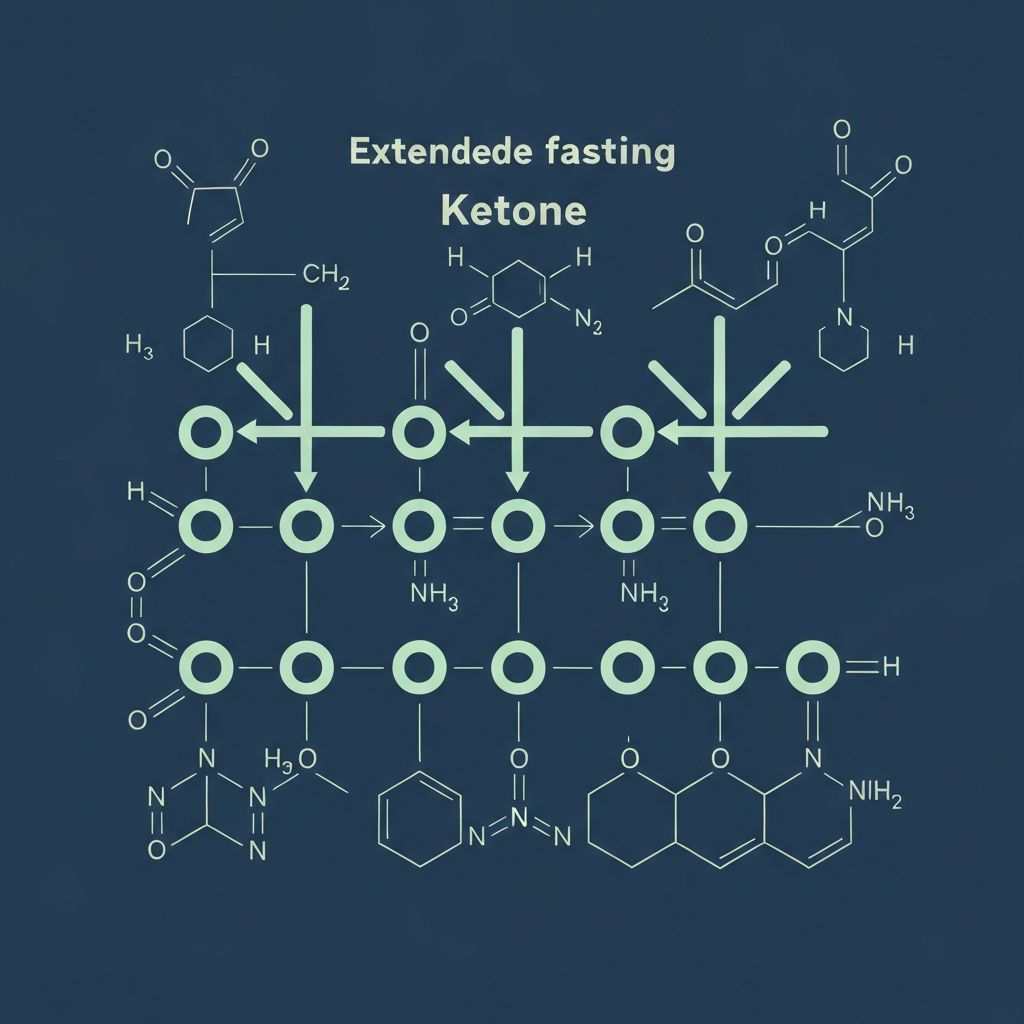
Hepatic Lipid Oxidation and Acetyl-CoA Accumulation
During fasting, hepatic lipid oxidation accelerates substantially as the primary energy substrate for hepatocytes. Adipose tissue triglyceride hydrolysis releases free fatty acids, which circulate bound to albumin and undergo uptake by the liver for β-oxidation.
The β-oxidation pathway sequentially removes two-carbon units from fatty acid chains, generating acetyl-CoA, the universal metabolic intermediate. Under fed conditions, acetyl-CoA primarily enters the citric acid cycle (Krebs cycle) for complete oxidation and ATP generation. However, during fasting, hepatic fatty acid oxidation produces acetyl-CoA at rates exceeding the oxidative capacity of the citric acid cycle.
This acetyl-CoA accumulation represents the fundamental biochemical trigger for ketogenesis. When hepatic acetyl-CoA concentrations exceed citric acid cycle capacity, the excess acetyl-CoA enters ketogenic pathways producing ketone bodies.
The Ketogenic Pathway: Three-Step Synthesis
Step 1: Acetoacetyl-CoA Synthesis
Two acetyl-CoA molecules condense via the enzyme thiophorase (acetyl-CoA acetyltransferase), forming acetoacetyl-CoA. This 4-carbon molecule represents the first committed ketone body precursor.
Step 2: HMG-CoA Synthesis
Acetoacetyl-CoA undergoes condensation with a third acetyl-CoA molecule catalysed by HMG-CoA synthase (3-hydroxy-3-methylglutaryl-CoA synthase), producing HMG-CoA. This 6-carbon intermediate stands at a metabolic crossroads: it can proceed toward ketogenesis or enter cholesterol synthesis pathways. During fasting, the ketogenic direction predominates.
Step 3: Acetoacetate Release
HMG-CoA lyase cleaves HMG-CoA, releasing acetoacetate (the first true ketone body) and acetyl-CoA. Acetoacetate enters bloodstream circulation distributed to extrahepatic tissues.
Ketone Body Metabolism in Peripheral Tissues
Acetoacetate, the primary ketone body released by hepatocytes, undergoes two fates in circulating blood:
Reduction to Beta-Hydroxybutyrate: The enzyme beta-hydroxybutyrate dehydrogenase catalyses acetoacetate reduction using NADH cofactor, producing beta-hydroxybutyrate. This conversion represents the predominant fate; circulating beta-hydroxybutyrate concentrations typically exceed acetoacetate 5-10 fold during fasting.
Spontaneous Degradation to Acetone: A small proportion of acetoacetate undergoes spontaneous decarboxylation, producing acetone. Acetone is volatile and eliminated primarily through respiratory exhalation, accounting for the characteristic "fruity" breath odour observed during extended fasting or ketogenic dietary approaches.
Utilisation in Extrahepatic Tissues: Beta-hydroxybutyrate and acetoacetate cross the blood-brain barrier via monocarboxylate transporters and enter neurons and astrocytes. The enzyme beta-hydroxybutyrate dehydrogenase (identical to the enzyme producing beta-hydroxybutyrate) catalyses oxidation back to acetoacetate, generating NADH for mitochondrial energy production.
Additionally, muscular, renal, and cardiac tissues utilise circulating ketone bodies as alternative fuel substrates. The brain, despite obligate glucose requirements, can derive up to 60-70% of energy from ketone bodies during prolonged fasting, reducing the gluconeogenic burden on the liver.
Temporal Progression of Ketogenesis
Early Fasting (0-4 hours): Immediately following nutrient absorption, circulating glucose remains elevated and insulin signalling suppresses lipolysis and ketogenesis. Hepatic glucose production remains minimal as glycogen reserves maintain blood glucose. Ketone body concentrations remain near baseline (typically 0.1-0.2 mM).
Post-Absorptive Transition (4-12 hours): As blood glucose declines and insulin secretion diminishes, adipose tissue lipolysis accelerates and hepatic fatty acid oxidation increases. Ketone body production increases, though remaining quantitatively modest (0.5-2 mM range). Hepatic glucose production escalates via glycogenolysis, maintaining glucose homeostasis.
Early Fasting (12-24 hours): Hepatic glycogen reserves deplete substantially, necessitating increased gluconeogenesis. Concurrent fatty acid oxidation drives robust ketone body synthesis. Circulating ketone concentrations reach 2-5 mM, becoming quantitatively significant.
Extended Fasting (24+ hours): With glycogen depleted, gluconeogenesis sustains glucose homeostasis whilst ketone bodies achieve peak concentrations (5-10 mM or higher). Ketone bodies supply 60-70% of cerebral energy requirements and substantial proportions of peripheral tissue energy demands.
Metabolic Advantages of Ketone Utilisation
Enhanced Mitochondrial Energy Yield: Ketone body oxidation generates more ATP per unit oxygen consumed compared to glucose oxidation. Beta-hydroxybutyrate oxidation yields approximately 1.5 additional ATP per molecule relative to glucose, reflecting the different electron carriers involved in substrate oxidation pathways.
Neurological Benefits: The brain normally exhibits obligate glucose dependence; however, ketone bodies provide alternative cerebral fuel. Some research suggests ketone body-derived energy production yields enhanced neurological efficacy compared to glucose alone, though mechanisms remain incompletely characterised.
Reduced Oxidative Stress: Ketone body oxidation generates relatively less reactive oxygen species compared to glucose oxidation, potentially reducing mitochondrial oxidative stress and free radical production.
Signalling Molecule Function: Beyond energy substrate roles, ketone bodies function as signalling molecules. Beta-hydroxybutyrate activates specific G-protein coupled receptors and inhibits histone deacetylases, influencing gene expression patterns and cellular processes including inflammation modulation.
Ketosis and Ketoacidosis: Distinct Physiological States
Nutritional ketosis occurring during time-restricted eating (or ketogenic dietary approaches) represents a benign metabolic state characterised by elevated ketone body concentrations (typically 1-10 mM) maintained through endogenous production from fatty acid oxidation.
Conversely, ketoacidosis represents a pathological state characterised by profound metabolic acidosis (arterial pH < 7.35), extreme ketone elevation (often >20 mM), and significant hyperglycaemia. Diabetic ketoacidosis occurs primarily in type 1 diabetics lacking insulin for glucose utilisation; metabolic derangement permits unchecked gluconeogenesis and ketogenesis simultaneously, overwhelming the body's buffering capacity and producing life-threatening acidosis.
Nutritional ketosis operates within normal physiological parameters with maintained pH homeostasis through active bicarbonate buffering and respiratory compensation. These represent fundamentally distinct pathophysiological states despite superficial terminological overlap.
Continue Exploring
Discover the cellular renovation processes of autophagy:
Continue to related timing concepts